How I Protected My Investments When Sudden Illness Hit — A Real Guide
What happens to your finances when health suddenly takes a turn? I learned the hard way when an unexpected illness disrupted my life—and my investment plans. Overnight, priorities shifted. Income slowed, medical bills arrived, and the energy to manage complex financial decisions vanished. This is not about get-rich-quick schemes or aggressive stock picks. It’s about real, practical strategies that helped me protect what I had worked years to build. It’s about making smart choices when strength and clarity feel out of reach. Financial security isn’t just about growth—it’s about resilience. And resilience, I discovered, must be designed long before crisis strikes.
The Wake-Up Call: When Health Crashes Your Financial Plan
It started with fatigue—something I brushed off as stress. Then came the diagnosis: a chronic condition requiring immediate treatment and months of recovery. I wasn’t just facing medical appointments and physical limits; I was facing financial instability. My freelance income, once steady, dried up. I couldn’t take on new clients. My partner scaled back work to help, cutting our household earnings in half. The savings we’d built for a home down payment began disappearing into co-pays, prescriptions, and specialist visits. What hurt most wasn’t just the money lost—it was the helplessness. I had invested for years, diversified across stocks and bonds, followed all the rules. But none of that prepared me for the moment I had to choose between selling investments at a loss or delaying treatment.
That moment changed everything. I realized that having a portfolio wasn’t the same as having protection. Traditional financial advice often assumes life proceeds predictably: steady income, gradual market growth, and the ability to make rational decisions over time. But real life isn’t that tidy. Health emergencies don’t schedule themselves around bull markets or retirement timelines. They arrive uninvited, demanding immediate resources and emotional bandwidth. I had focused on long-term growth but neglected short-term resilience. The emotional toll was just as heavy as the financial strain. Worrying about money while trying to heal only deepened the stress, slowing recovery. I wasn’t alone—studies show that medical issues are a leading cause of financial distress, even among middle-income families with insurance. The lesson was clear: financial planning must account for disruption, not just progression.
From that point, I shifted my mindset. It wasn’t enough to grow wealth; I needed to shield it. I began researching how to structure investments not just for returns, but for stability during crises. I spoke with financial advisors, reviewed case studies, and studied portfolios designed for flexibility. What emerged wasn’t a radical overhaul, but a series of thoughtful adjustments—small changes with powerful implications. These weren’t strategies marketed to young investors chasing high yields, but practical tools for anyone who values security over spectacle. The goal wasn’t to eliminate risk entirely—that’s impossible—but to build systems that hold up when life doesn’t go as planned.
Why Standard Portfolios Fail in Medical Crises
Most investment advice is built on long-term assumptions: time in the market beats timing the market, diversification reduces risk, and compound growth rewards patience. These principles are sound—but they rest on a hidden foundation: stability. They assume you’ll have a steady income to keep contributing, the mental clarity to avoid panic selling, and the time to wait out downturns. When sudden illness hits, that foundation cracks. Market downturns no longer feel like temporary setbacks—they feel like personal disasters. The idea of holding through volatility becomes nearly impossible when you need cash now, not five years from now.
Consider a typical portfolio: 60% in equities, 30% in bonds, 10% in alternatives. It’s diversified, balanced, and aligned with conventional wisdom. But when medical bills mount, this structure can become a liability. Equities are long-term assets, often illiquid in the short run. Selling them during a market dip locks in losses, eroding years of growth in weeks. Bonds may provide some income, but accessing principal quickly isn’t always easy. Alternative investments like real estate or private funds are often locked up for years, making them useless in an emergency. Even retirement accounts, while tax-advantaged, come with penalties for early withdrawal, adding financial insult to physical injury.
Beyond liquidity, decision-making capacity is another overlooked factor. When fatigued or medicated, even simple financial choices feel overwhelming. Reviewing statements, adjusting allocations, or contacting brokers requires focus and energy—resources that illness depletes. In my case, I delayed reviewing my portfolio for weeks because I simply didn’t have the mental stamina. That delay meant missed opportunities to rebalance or access funds efficiently. Standard portfolios assume an active, engaged investor. But in a crisis, the investor may be absent—physically or mentally. Without systems in place, even well-intentioned plans can unravel.
Another flaw is the lack of integration between investment and emergency planning. Many people treat their emergency fund as separate from their investment strategy—as if financial shocks exist in a different universe from long-term goals. But in reality, they’re deeply connected. A health crisis doesn’t just disrupt your body; it disrupts your entire financial ecosystem. Without a bridge between emergency liquidity and long-term growth, investors are forced into reactive, often costly decisions. The result? A portfolio that performs well in textbooks but fails in real life. Recognizing these structural weaknesses was the first step toward building something better—not just for me, but for anyone who values financial security in uncertain times.
Building a Crisis-Ready Investment Framework
Resilience isn’t luck; it’s design. After my experience, I restructured my investment approach around one core principle: preparedness. The goal wasn’t to maximize returns at all costs, but to ensure that my financial foundation could withstand sudden disruption. This meant shifting from a one-size-fits-all portfolio to a tiered framework—one that separates assets by purpose, time horizon, and accessibility. Think of it like a home: the foundation must be solid, the structure flexible, and the exits clearly marked. In financial terms, this translates to a layered approach where each tier serves a distinct role, reducing pressure on any single component during a crisis.
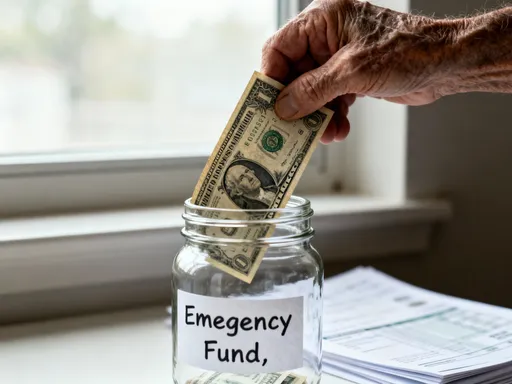
The first tier is emergency liquidity—cash or near-cash assets that can be accessed within days, without penalties or market risk. This isn’t just a savings account; it’s a strategic reserve integrated into the broader investment plan. I now keep six months of essential expenses in a high-yield money market fund, accessible via a linked debit card but separate from daily spending. This buffer ensures I never have to sell investments to cover urgent costs. The second tier is stability—low-volatility assets like short-term bonds, Treasury Inflation-Protected Securities (TIPS), and dividend-paying blue-chip stocks. These aren’t meant for rapid growth, but for consistent income and minimal fluctuation. They act as shock absorbers, maintaining value when markets dip and providing a source of income without forced sales.
The third tier is long-term growth—equities, index funds, and other higher-risk holdings. This is where the majority of wealth accumulation happens, but it’s also the most vulnerable during crises. The key is to protect this tier by insulating it from short-term demands. I no longer rely on this portion for liquidity. Instead, it’s set on autopilot: automatic contributions continue when possible, but withdrawals are off-limits unless the emergency and stability tiers are exhausted. This separation prevents emotional decisions—like selling stocks at a market low—just to cover a medical bill.
Another critical element is simplicity. Complex portfolios with multiple accounts, obscure funds, or intricate strategies may impress on paper, but they fail under stress. When energy is limited, clarity is essential. I consolidated overlapping accounts, eliminated underperforming funds, and standardized my allocations. Now, my entire investment picture fits on one page. This isn’t about dumbing down—it’s about reducing cognitive load. A crisis-ready framework isn’t built for peak performance in ideal conditions; it’s built to function when conditions are far from ideal. It’s about creating a financial environment where stability isn’t hoped for—it’s engineered.
Liquidity Without Loss: Smart Access to Funds
One of the most painful aspects of my crisis was the timing. I needed cash just as the market entered a downturn. Selling stocks meant locking in losses—essentially paying twice for medical care. I learned that liquidity isn’t just about having access to money; it’s about accessing it without sacrifice. The goal is to avoid fire sales—those rushed, emotionally charged decisions that erode wealth at the worst possible moment. Achieving this requires planning long before the emergency strikes.
The foundation of smart liquidity is the emergency reserve. But not all reserves are created equal. A standard savings account may be safe, but with low interest, it loses ground to inflation over time. I now use a tiered liquidity approach: part in a high-yield savings account, part in short-term Treasury ETFs, and part in a credit line backed by a low-loan-value life insurance policy—a tool that provides tax-free access without selling investments. This combination offers flexibility: the savings account for immediate needs, the ETFs for slightly larger expenses with modest growth potential, and the insurance-backed line for true emergencies. None of these depend on market performance, so I’m not forced to sell when prices are down.
Another strategy is dividend harvesting. Instead of selling shares, I rely on income from dividend-paying stocks and bond interest to cover some medical co-pays and living expenses. These payments continue regardless of market swings, providing a steady, no-sell cash flow. I structured my stability tier to generate enough annual income to cover three to four months of essential costs—enough to bridge gaps without touching principal. This doesn’t eliminate the need for an emergency fund, but it reduces the amount I need to keep in cash, allowing more capital to work in the market over time.
Tax efficiency is another often-overlooked factor. Withdrawing from taxable accounts, IRAs, or 401(k)s can trigger penalties or push you into a higher tax bracket, especially if you’re no longer earning income. I worked with a tax advisor to map out withdrawal sequences that minimize tax impact. For example, pulling from taxable accounts first—where capital gains rates are lower—before touching tax-deferred accounts, can save thousands. I also reviewed my cost basis and held assets long enough to qualify for long-term capital gains treatment. These details aren’t exciting, but they matter deeply when every dollar counts. Liquidity without loss isn’t about avoiding hard choices—it’s about making them from a position of strength, not desperation.
Automating Discipline: Systems That Work When You Can’t
When I was at my weakest—bedridden, medicated, mentally foggy—the last thing I could manage was financial oversight. Yet, my investments still needed attention. Automatic rebalancing kept my allocations from drifting too far. Dividend reinvestment continued growing my holdings. Monthly contributions to retirement accounts didn’t stop. These systems ran in the background, requiring no action from me. That automation wasn’t luck—it was planning. I had set it up months before the crisis, assuming I’d always be able to manage things myself. I was wrong. But the systems held.
Automation is one of the most powerful tools for financial resilience. It removes emotion, fatigue, and distraction from decision-making. I now have rules in place: if my stock allocation drops more than 5% below target, the platform automatically buys more. If it rises above, it sells a portion. This keeps my risk level consistent without requiring me to monitor daily swings. Dividends are reinvested by default, compounding growth even when I’m not thinking about it. These aren’t flashy strategies, but they provide continuity when active management isn’t possible.
Equally important is human backup. I designated a trusted family member as my financial contact with limited access to my accounts—enough to view statements, make transfers, or contact customer service, but not to withdraw large sums. I also documented my account details, passwords, and key contacts in a secure digital vault, with access granted only under specific conditions. This isn’t about losing control; it’s about ensuring someone can step in if I can’t. I reviewed all this with my advisor and updated my durable power of attorney to include financial management authority.
Digital tools also play a role. I use a consolidated financial dashboard that tracks all accounts, net worth, and cash flow. It sends alerts for unusual activity, low balances, or upcoming bills. During my recovery, these alerts helped my partner manage our finances without micromanaging. Automation doesn’t replace judgment—it preserves it for when it’s most needed. It’s the financial equivalent of cruise control: steady, reliable, and freeing up mental energy for healing. When you can’t be at the wheel, the car should still move safely forward.
Risk Control: Shielding Your Wealth from Unexpected Shocks
Most investors think of risk as market volatility—the chance of losing money in a downturn. But in a health crisis, risk takes a different form: the risk of forced liquidation, the risk of poor decisions under stress, the risk of cascading financial damage. True risk control means addressing these hidden threats, not just stock swings. It’s about creating buffers, redundancies, and fail-safes that protect wealth when life goes off track.
One key strategy is asset segregation. I now keep my emergency funds completely separate from my investment accounts—not just in different banks, but in different mental categories. This reduces the temptation to dip into long-term savings for short-term needs. I also limit exposure to illiquid assets. While real estate or private equity can offer strong returns, they’re hard to access quickly. I cap such investments at 10% of my portfolio, ensuring they don’t become obstacles in a crisis.
Insurance is another layer of protection. Beyond health insurance, I reviewed my disability coverage and added a supplemental policy that kicks in if I can’t work for more than 90 days. It’s not cheap, but it replaces 60% of my income—enough to cover essentials without touching investments. I also considered long-term care insurance, though it wasn’t right for my situation. The point isn’t to insure against every possibility, but to identify the most likely and most damaging risks and address them proactively.
Finally, I adopted a more conservative rebalancing rule. Instead of rebalancing annually, I now do it only when allocations drift by more than 10%, reducing transaction costs and tax events. I also avoid holding assets that require active management—like individual stocks with high monitoring demands. Simplicity, once again, is a form of risk control. A portfolio that’s easy to understand and manage is less likely to be mismanaged in a crisis. Shielding wealth isn’t about hiding from risk—it’s about managing it wisely, so that when life surprises you, your finances don’t have to.
Rebuilding and Reflecting: Lessons from Recovery
Recovery wasn’t linear. There were setbacks, fatigue, and moments of doubt. But as my health improved, I began to see the crisis not just as a loss, but as a lesson. My investments survived—not unscathed, but intact. More importantly, I emerged with a deeper understanding of what financial security really means. It’s not about the highest returns or the most complex strategies. It’s about peace of mind. It’s knowing that even when life knocks you down, your financial foundation won’t collapse.
I no longer measure success by portfolio size alone. I also measure it by resilience—by how well my plan holds up under pressure. My priorities have shifted from aggressive growth to sustainable stability. I invest with more intention, more patience, and more humility. I’ve accepted that I can’t predict the future, but I can prepare for uncertainty. That means continuing to refine my emergency systems, reviewing insurance coverage annually, and staying disciplined with automation.
For anyone facing a similar challenge, my advice is simple: start now. Don’t wait for a crisis to test your plan. Build your emergency reserve. Simplify your portfolio. Automate what you can. Talk to your family about your finances. These steps won’t prevent illness or eliminate stress, but they can prevent financial disaster. Financial resilience isn’t about perfection—it’s about preparation. It’s about creating a safety net so strong that even when life pulls the rug out, you don’t fall through. And that, more than any return percentage, is the true measure of financial success.